
Marketing without data is like running a campaign with no audience in mind. Companies that rely on numbers instead of guesswork see higher engagement, better conversions, and a stronger return on investment. A data-driven marketing strategy doesn’t just help with targeting the right audience. It also ensures that every dollar spent has a measurable impact. Businesses that optimize campaigns based on real-time insights can lower acquisition costs by up to 50% while increasing revenue by 5-8% annually. That’s why marketers using advanced analytics outperform competitors who rely on outdated methods. Even simple strategies, like investing in a backlink service, can be far more effective when guided by data. If you want to maximize impact and eliminate wasted effort, it’s time to optimize your approach with numbers, testing, and technology.
Why Is a Data-Driven Strategy the Backbone of Modern Marketing?
Data drives every part of a successful marketing strategy. It helps businesses identify target audiences, refine messaging, and optimize spending. Without data, companies risk spending thousands of dollars on ads that never convert. Brands that use analytics to guide their campaigns see a 20% improvement in decision-making accuracy. That translates to higher engagement and better sales. Consumers generate massive amounts of data every day. Every website visit, product search, and social media interaction creates valuable insights. Marketers can use this information to track trends, predict buying behavior, and personalize content.

Companies that fail to leverage data struggle to keep up with competitors who refine their approach based on performance metrics. Investing in data-driven tools is essential for staying competitive. Businesses that analyze their audience’s behavior can adjust marketing efforts in real time. That means ad budgets are spent efficiently, and resources go toward what works, not what might work. A data-driven marketing strategy doesn’t eliminate creativity, but it ensures that creative decisions are backed by facts, not assumptions.
Why Guessing in Marketing Is Costing You Money
Intuition may work in creative brainstorming, but when it comes to running a successful marketing campaign, relying on gut feelings can be a financial disaster. A campaign built on assumptions can burn through thousands in ad spend without generating results. That’s why businesses using data insights make decisions that are 20% more effective and 50% more cost-efficient.
Take digital advertising as an example. A company might assume their best-performing audience is in the 25-34 age range. However, data could reveal that conversions spike among users aged 35-44, meaning the entire targeting approach needs adjusting. This kind of insight saves money and ensures ad budgets drive actual sales, not just clicks. Marketers who still rely on outdated intuition-driven strategies are losing ground to competitors optimizing in real-time with a data-driven marketing strategy.
What Are the Best Data Sources for Marketing?
Not all data is useful, and relying on the wrong sources can lead to costly mistakes. Marketers work with two primary types of data: first-party and third-party. First-party data comes directly from customers. This includes website analytics, purchase history, and email interactions. It’s the most valuable because it reflects real user behavior. Third-party data is collected by external providers. It can help fill in gaps, offering insights about broader market trends. However, it’s less reliable because it isn’t unique to a business.
Companies that prioritize first-party data see better results. That’s why brands investing in first-party analytics increase conversions by up to 30%. Tracking customer activity on a website, monitoring ad performance, and analyzing email open rates can lead to more effective campaigns. Businesses using high quality backlinks also benefit from tracking referral traffic to see where their audience is coming from. Knowing where customers originate helps businesses fine-tune outreach efforts and attract more of the right visitors.
How to Collect Data That Actually Drives Conversions
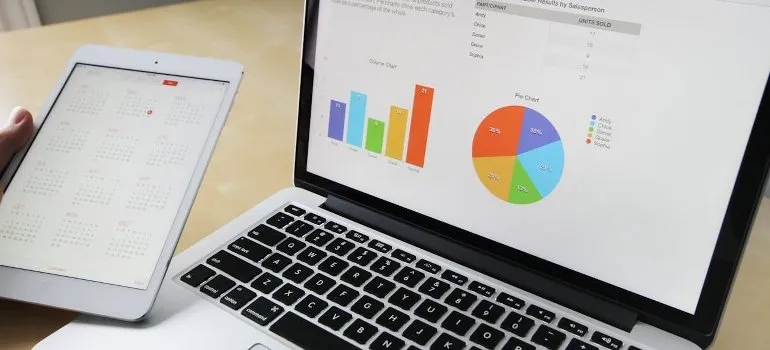
Many businesses gather data without a clear plan, leading to wasted efforts and overwhelming reports that don’t translate into action. The real challenge is ensuring it’s useful. Businesses must focus on high-intent data rather than vanity metrics. For example, knowing that 50,000 people visited your website last month isn’t helpful unless you understand what actions they took. Did they abandon carts? Did they spend more than a minute on a product page? Was there a specific landing page with a high drop-off rate?
First-party data—collected directly from customer interactions—is the most valuable because it reflects real engagement. Meanwhile, third-party data helps fill the gaps, giving insight into broader market trends and competitor activity. When combined effectively, these insights can transform weak campaigns into highly profitable marketing strategies.
How Do You Set Effective Data-Driven Marketing Goals?
Data without clear goals is useless. Marketers must define specific key performance indicators (KPIs) to measure success. Tracking the wrong metrics can lead to wasted ad spend and ineffective campaigns. A well-defined strategy includes clear benchmarks, allowing businesses to adjust based on real-time results. For example, if the goal is to increase email sign-ups, tracking click-through rates and conversion rates will reveal what’s working. If engagement drops, adjusting subject lines or call-to-action buttons can make a difference.
Similarly, businesses optimizing paid ads need to monitor cost-per-click (CPC) and return on ad spend (ROAS). A company that spends $5 per click but only generates $3 in revenue needs to refine its targeting strategy. Companies that set clear, measurable objectives see 376% higher success rates in their campaigns. Whether it’s growing social media engagement or increasing sales, every goal should be tied to actionable data. Even efforts like using rare and powerful backlinks should have measurable impacts on SEO rankings and organic traffic. Without data, businesses risk making costly decisions that don’t drive results.

Why Your Marketing Goals Fail (And How to Fix Them)
Setting goals is easy—hitting them is the hard part. One of the biggest reasons marketing campaigns fail is that businesses track the wrong metrics. Instead of focusing on key performance indicators (KPIs) that align with revenue growth, they track vanity metrics like social media likes or page views.
For instance, if a company wants to increase online sales but only tracks website traffic, they could be missing the real problem—poor conversion rates. A rare backlinks strategy, for example, might drive traffic, but without clear purchase pathways, that traffic won’t translate into sales. Businesses must break goals into actionable steps, like improving landing page conversion rates by 15% or reducing cart abandonment by 10%. When KPIs are tied to measurable revenue-driving actions, marketing efforts become laser-focused and highly effective.
How Can You Personalize Marketing Using Customer Data?
Consumers expect personalization. Brands that tailor messaging based on data see engagement rates increase by up to 80%. The most successful businesses use behavioral insights to customize interactions. Tracking past purchases, browsing history, and social media activity allows for hyper-targeted marketing. For example, an e-commerce site can recommend products based on previous purchases. A fitness brand can send personalized workout plans based on user preferences.
AI-driven recommendation engines analyze behavior and suggest relevant content automatically. Businesses that fail to personalize risk losing customers to competitors who do. Even email marketing benefits from data-driven personalization. Open rates increase by 29% when subject lines include a recipient’s name or past interactions. Companies exploiting reverse backlink engineering can also personalize their outreach efforts. By analyzing competitors’ backlinks, they can target sites likely to drive relevant traffic to their own brand. The more personalized the approach, the stronger the results.
How Brands Use AI to Create Hyper-Personalized Marketing
Personalization is delivering the right message to the right person at the right time. Companies using AI for personalization see engagement rates increase by 80% or more. The reason? AI analyzes real-time customer behavior to tailor content dynamically.

For example, an e-commerce store using AI can recognize when a shopper views a product multiple times but hasn’t made a purchase. Instead of sending a generic promotion, the system automatically triggers an email offering a limited-time discount for that exact product. Similarly, AI-powered chatbots can recommend products based on past purchases, increasing upsell opportunities. Businesses not using AI for personalization are leaving money on the table. Meanwhile, competitors refining their messaging with a data-driven marketing strategy are seeing exponential growth.
How Can Predictive Analytics Improve Marketing Campaigns?
Predictive analytics allows businesses to anticipate customer behavior before it happens. AI and machine learning analyze patterns in data to forecast future trends. Companies using predictive models can optimize ad targeting, improve customer retention, and increase conversions.
For example, Netflix uses predictive analytics to recommend content based on user behavior. E-commerce businesses use it to suggest products that customers are likely to buy next. Brands that integrate predictive data into their AI-powered SEO tools can optimize content strategies before trends peak. Businesses using predictive analytics see up to a 20% increase in revenue. It’s not just about reacting to data—it’s about using it to shape the future.
How Predictive Analytics Is Changing Marketing Forever
Predictive analytics is forecasting future actions. Using predictive models allows businesses to gain an edge by anticipating what customers will do before they even know it themselves. For example, an online travel agency can analyze browsing patterns to predict when a customer is likely to book a vacation. By sending targeted offers right before that decision-making moment, they increase conversion rates significantly.
Retailers using predictive analytics adjust inventory before demand spikes, reducing stockouts and maximizing sales. Even content marketing is evolving—AI can now predict which blog topics will trend months in advance, helping businesses stay ahead. Companies relying solely on historical data are reacting too late. Those leveraging predictive insights are proactively shaping the customer journey for maximum impact.

Why Is A/B Testing Essential for Marketing Success?
Marketing strategies require constant refinement. A/B testing helps businesses compare different versions of a campaign to see which performs better. Companies that conduct regular A/B testing improve conversion rates by 49%.
For example, changing a call-to-action from “Buy Now” to “Get Yours Today” can impact click-through rates. Adjusting landing page layouts, ad copy, or email subject lines based on test results ensures better performance. Even adjusting budget-friendly digital marketing strategies can be tested. Marketers can compare cost-effective methods to determine which delivers the best ROI. Without testing, businesses rely on assumptions instead of proven results.
The Secret Behind High-Converting A/B Tests
A/B testing is a science that determines what truly influences customer decisions. But most companies do it wrong. They test too many variables at once, leading to inconclusive results, or they don’t run tests long enough to get statistically significant data.
The most successful businesses run controlled experiments. For instance, an e-commerce store might test two versions of a product description: one focusing on emotional appeal and the other emphasizing technical details. After running the test for a full sales cycle, they analyze which version led to higher conversions. Similarly, a company refining its marketing strategies can A/B test ad placements to determine which delivers better ROI. The key is testing one major change at a time and gathering enough data to make decisions with confidence.
How Can Marketing Automation and AI Improve Efficiency?
AI and automation reduce manual work and increase efficiency. Automated email campaigns generate 320% more revenue than non-automated campaigns. Businesses that use AI for ad optimization see 25% lower customer acquisition costs.
Chatbots, predictive analytics, and automated bidding on ads all streamline marketing efforts. AI-driven tools also ensure better audience targeting by analyzing real-time behavior. Businesses investing in improving topical authority can use AI to identify trending keywords before they peak. The faster brands react, the better their positioning in search rankings.
The AI-Powered Future of Marketing Automation
AI-driven automation learns and adapts in real time, making marketing efforts smarter and more efficient. Businesses that integrate AI into their automation workflows see conversion rates increase by 50% or more. Take paid advertising. AI can now optimize bidding strategies every second, adjusting budgets automatically to maximize ROI. In email marketing, AI tools analyze user interactions and send follow-ups at the exact moment a customer is most likely to engage.
Even social media automation is evolving—AI predicts the best posting times based on audience activity patterns. Companies that stick to manual marketing tasks are wasting valuable time. Those using AI-powered automation free up resources while achieving better results. It’s not about replacing marketers—it’s about making them far more effective.
How Can Businesses Stay Ahead With Data-Driven Marketing?
Marketing evolves rapidly, and data-driven approaches must keep up. AI, blockchain, and advanced analytics are shaping the future of marketing. Companies investing in old-school SEO marketing may need to rethink traditional methods.

Emerging trends show that businesses using AI for predictive analytics see 60% faster decision-making. Marketers leveraging blockchain for data security gain a competitive advantage. Those staying ahead of technology shifts outperform businesses stuck in outdated strategies.
Why Staying Still in Marketing Means Falling Behind
Marketing isn’t static—it’s a race to stay ahead. Brands that refuse to innovate will see engagement drop, competitors outperform them, and customer loyalty fade. Emerging trends like AI-powered SEO tools, predictive analytics, and blockchain security are reshaping the industry. Businesses that fail to adapt are already losing ground.
For example, companies relying on old-school SEO strategies might see rankings decline while competitors using AI-driven optimization dominate search results. Those who hesitate to adopt automation will watch rivals scale faster and smarter. The difference between brands that thrive and those that struggle? Their ability to evolve before the market forces them to.
Why a Data-Driven Marketing Strategy Is the Key to Long-Term Success
A data-driven marketing strategy is the foundation of modern marketing success. Businesses using analytics to optimize campaigns see lower costs, higher engagement, and better ROI. Investing in the right tools and refining strategies based on real insights ensures long-term success. Data-driven decisions don’t just improve marketing—they define the future of growth.